Spring Forum
The 2026 Spring Forum, sponsored by Pinsent Masons was rated a thought provoking and networking success by attendees. A new format was adopted this year to enable more discussion and input from attendees so that everyone could learn from different experiences and opinions. The Forum had a focus on Padel and on new technology, using key facilitators to provoke debate.
Ray Algar of Oxygen Consulting looked at the long-term sustainability of Padel, given the rapid increase in built and planned Padel facilities. Sharon Orrell of the LTA (supported by Tom Murray and Steve Yeardley) considered the impact of Padel on tennis and tennis clubs and Brian Flasck of Zenniz UK highlighted how modern technology can help clubs streamline operations and boost member engagement.
Annual General Meeting / Summer Social
TIA Members are reminded that this year’s AGM will take place at the LTA’s National Tennis Centre on Thursday July 2nd at 10.30. A buffet lunch will be provided for all attendees after the formalities. Papers for the meeting will be circulated to all members in early June
Wimbledon passes
The LTA has again kindly provided a number of ground tickets to the Championships for TIA Industry members on Thursday July 2nd. If you wish to request a ticket, get in touch with phil@tiauk.org as soon as possible. Tickets are allocated on a first come first serve basis and are only available if the person requesting the ticket is also attending the TIA AGM at the National Tennis Centre on the same day
Zenniz Smart Court
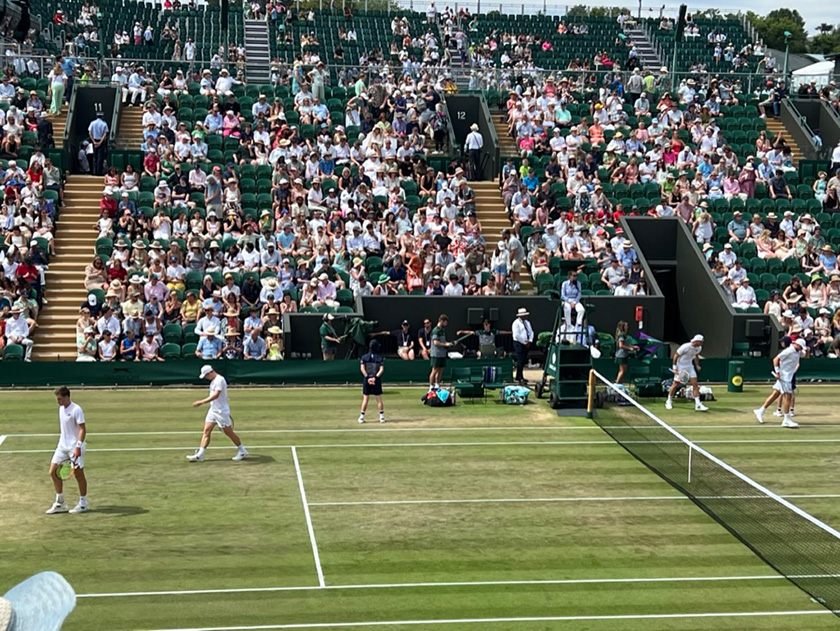
Zenniz, the complete Smart Tennis Court System is the newest member of TIA. Zenniz is a single platform to engage players, elevate coaching and to grow your club’s revenue. The system enhances every practice and match with real time performance tracking, electronic line calling and immersive video in one system.
Brian Flasck is its UK Manager who facilitated the discussion on new technology at the TIA’s recent Spring Forum. He would be pleased to speak to any rackets club or venue that wants to generate revenue and boost player engagement
Croeso i Abertawe
Welcome to Swansea Tennis Centre – the newest addition to our growing list of Operator Members. One of the first ITI centres built in the 1980’s it has 4 indoor acrylic and 4 all weather outdoor floodlit courts. With the Council facing financial challenges in 2011, users and volunteers formed Tennis Swansea 365, a not-for-profit organisations that operates the centre and provides tennis and multi-sport opportunities for the people of Swansea.
As well as a true ‘pay and play’ community operation, the centre is also home to Swansea Tennis Academy, an LTA accredited performance programme which has a reputation for producing national and international players through high quality training, strength and conditioning and tournament support programmes.
01792 650484
enquiries@swanseatenniscentre.co.uk
LTA Tennis Foundation generates over £21m of social value in 2025
THE LTA Tennis Foundation has published its latest Annual Report, showcasing the charity’s work and impact throughout 2025. With support from its learning and evaluation partner, Bean Research, it received the first full set of impact data from its Grant Making Framework. The results highlight the scale of the charity’s impact, with more than £21m of social value generated in 2025.
Tim Lawler MBE, LTA Tennis Foundation Chair of Trustees, said: “It has been an amazing year for the LTA Tennis Foundation. In a short space of time, we have seen outstanding impact generated through our funding, driven by an incredible network of partners. I hope you enjoy reading more about the difference achieved together. Thank you to everyone who continues to support our work to improve lives through tennis.”
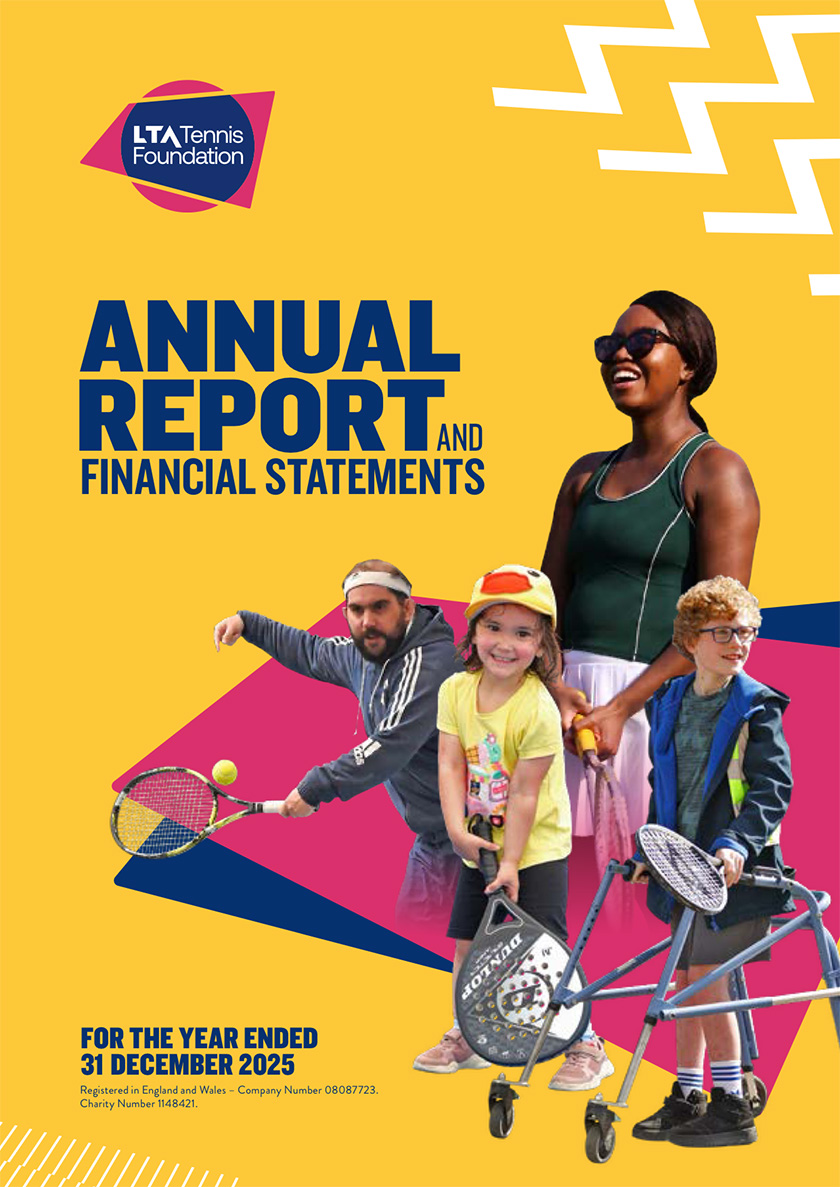
Further details and the full Annual Report can be found on the newly-launched LTA Tennis Foundation website.
Curtesy ‘Charity Today’
East Glos and West Worthing clubs honoured at the 2026 LTA Awards, presented by Lexus
First launched in 2015 the LTA Awards honour the extraordinary contributions of volunteers, coaches, officials and players who give their time, energy and expertise to grow the game of tennis and padel at every level. More than 3,000 nominations were submitted across 14 award categories, reflecting the depth of talent, service and innovation within British tennis and padel.
The Club of the Year award, went to TIA Operator member East Glos Club for growing their membership and coaching programme, as well as diversifying their playing offer by integrating padel courts within the venue.
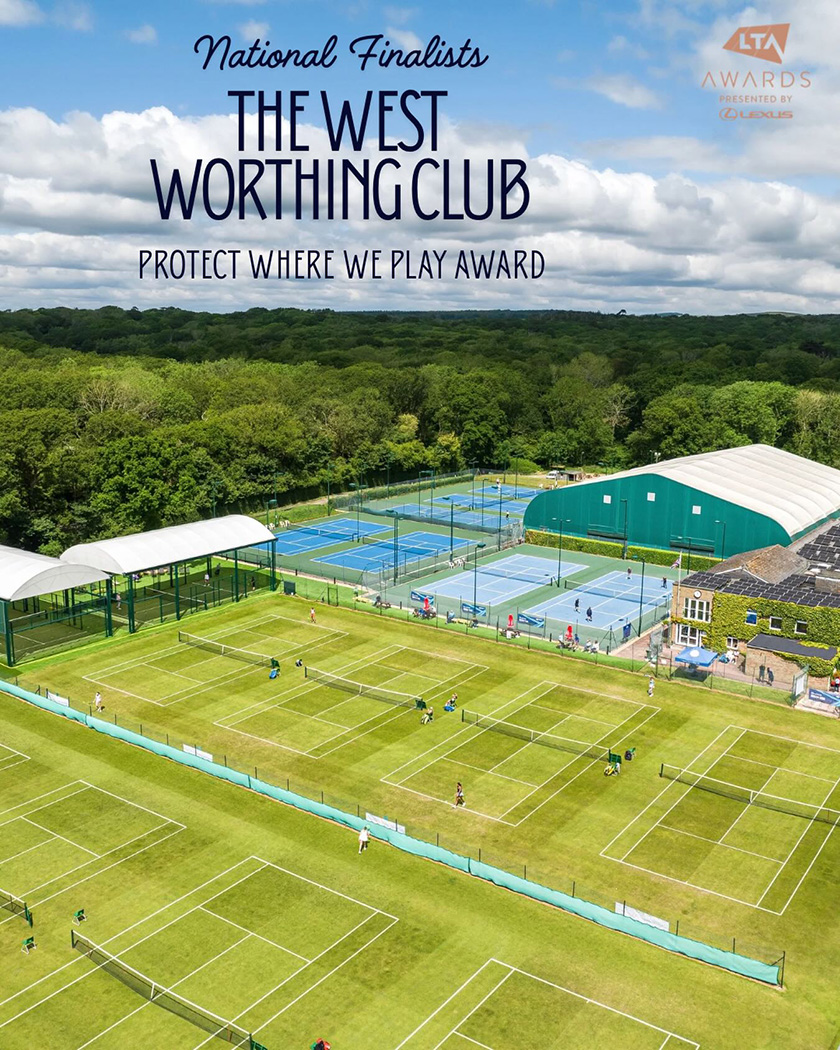
And another TIA Member, The West Worthing Club was given the ‘Protect Where We Play’ Award, recognised for outstanding commitment in setting the standard for environmental sustainability in sport, reducing the carbon footprint and safeguarding community spaces.
“It was great to win this award,” said Carole Naunton, Volunteer Director at the Club. “Tennis clubs can be quite energy-intensive, especially with things like floodlighting. Support from the LTA, such as funding for LED lighting, can really help reduce costs. We’ve also installed solar panels, which are saving us around £30,000 a year in energy bills. That’s made a huge difference, allowing us to reinvest into facilities and run more participation events.”
The LTA Awards, presented by Lexus, celebrate the passion, dedication and impact of the people who make tennis and padel thrive across Britain.
Curtesy: The LTA
US Tennis Participation Report 2025
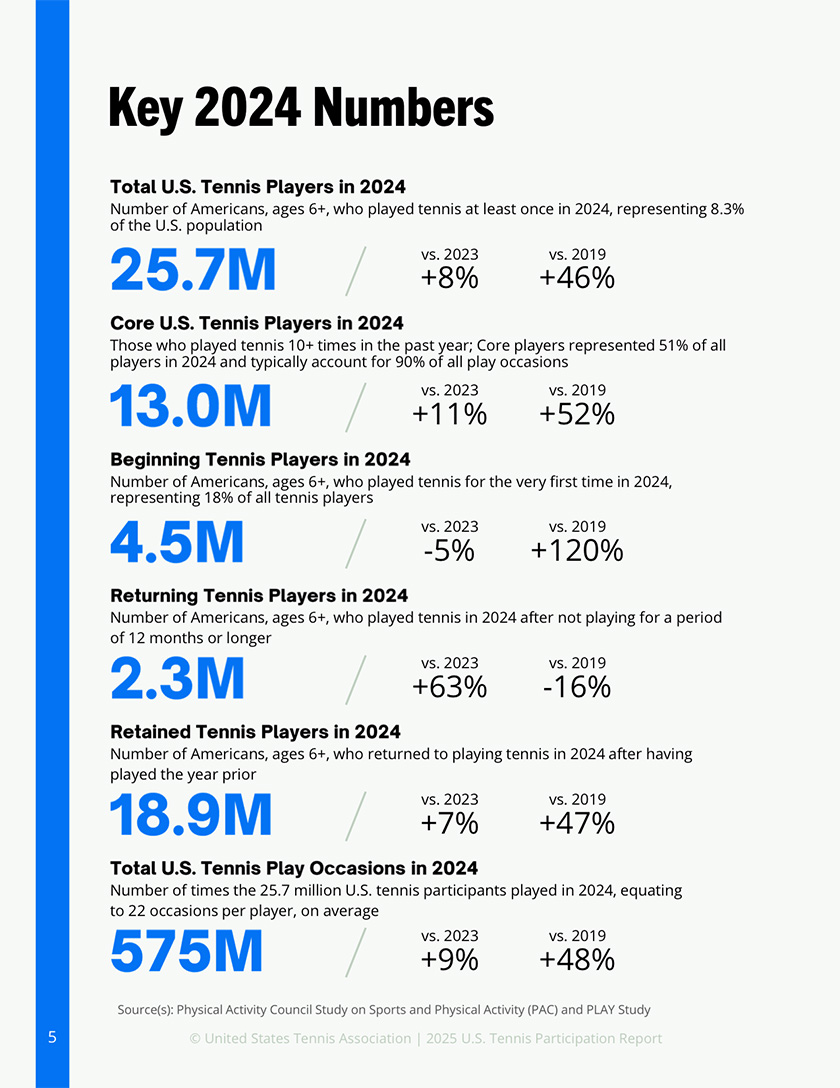
The 2025 US tennis Participation Report was published this month – here are some key 2024 numbers
Curtesy: USTA
Padel and Pickleball News
The following is an extract from a recent article from the European Business Magazine
The Padel Gold Rush – key takeaways on the Padel Economy
- The 24-Month ROI: Premium indoor clubs are reaching break-even in record time due to high-density court layouts.
- The €6B Valuation: The global industry has tripled in value since 2022, driven by massive infrastructure expansion in the UK, Germany, and the US.
- Daily club openings in 2022 was 3 per day increasing to an average of 9 per day in 2026
Why Padel Works as a Business
The economics of padel are unusually attractive. A padel court is cheaper to build than a tennis court, requires less space, and accommodates four players simultaneously. This generates significantly higher revenue per square meter because courts can be booked across twelve to fourteen hours a day.
For investors who understand subscription economics, padel clubs have an immediately recognisable financial profile: high frequency of use, a loyal local customer base, and predictable booking revenue.
Where the Money Is Going
Qatar Sports Investments (QSI)—the group that owns Paris Saint-Germain—has been the most prominent institutional backer through Premier Padel. Their involvement reflects a pattern of sovereign capital treating padel as a strategic media asset.
While Spain remains the “Capital of Padel” with over 17,300 courts, the geography is widening. Italy has surpassed 10,000 courts, and the UK saw a record-breaking 2025, surpassing the 1,000-court landmark. In the US, while still in the early stages, player participation surged to over 500,000 this year, with a massive pipeline of “Tech-Hub” clubs slated for 2027. Just as smart money is hunting for the “Next Wrexham,” institutional investors are realizing padel offers a cleaner, more predictable exit strategy than professional football.
Who Is Playing Padel — and Why
Over 35 million people now play padel worldwide, across more than 130 countries. The demographic profile is unusually broad for a racket sport — 40% of players are women, one of the highest female participation rates in any competitive sport, and 54% of players are aged 26 and above. It spans office workers booking Friday evening courts and elite footballers unwinding after training. Jürgen Klopp famously used padel sessions with his coaching staff to brainstorm tactics. David Beckham, Messi and Neymar are all regulars. Serena Williams has picked up a racket. Celebrity association has accelerated mainstream adoption in ways that most sports take decades to achieve.
The reason people play comes down to three things: accessibility, sociability and the 92% return rate — meaning nine out of ten people who try it once come back. Unlike tennis, which requires years of practice before a rally feels satisfying, padel’s enclosed glass walls mean the ball stays in play far longer. Beginners can have a genuinely enjoyable game within an hour of picking up a racket. It is always played in doubles, which makes it inherently social — a workout and a social occasion in one. Players burn 500–700 calories per hour, which keeps the fitness crowd engaged. The combination of low barrier to entry, high enjoyment, and strong community culture is what drives retention — and what makes padel’s growth feel structural rather than seasonal.
The Technology Layer
What distinguishes the current “Padel Gold Rush” from a simple property play is the technology infrastructure. Booking platforms like Playtomic now influence 37% of all club engagement, turning venues into data-rich businesses.
We are also seeing a “Hardware-to-Software” revenue loop. Smart rackets with embedded sensors from brands like Bullpadel and Head allow players to analyze their game via AI coaching apps. In Europe, this tech-forward approach is merging with the banking revolution. Tier-1 clubs are increasingly transitioning to Wero to bypass the high fees of legacy US card giants, finding an “invisible” 100-basis-point margin improvement in the process.
The Olympic Question and the Horizon
Padel’s governing bodies are actively pursuing inclusion in the Brisbane 2032 Olympics. If successful, current valuations will look conservative. The sport that began as a workaround for a lack of space is rapidly running out of ceiling. For investors, the question is no longer whether padel is a real asset class. It is whether they got in early enough.
Curtesy: European Business Magazine
Powerleague secures £22.5m financing to drive expansion of its padel plans
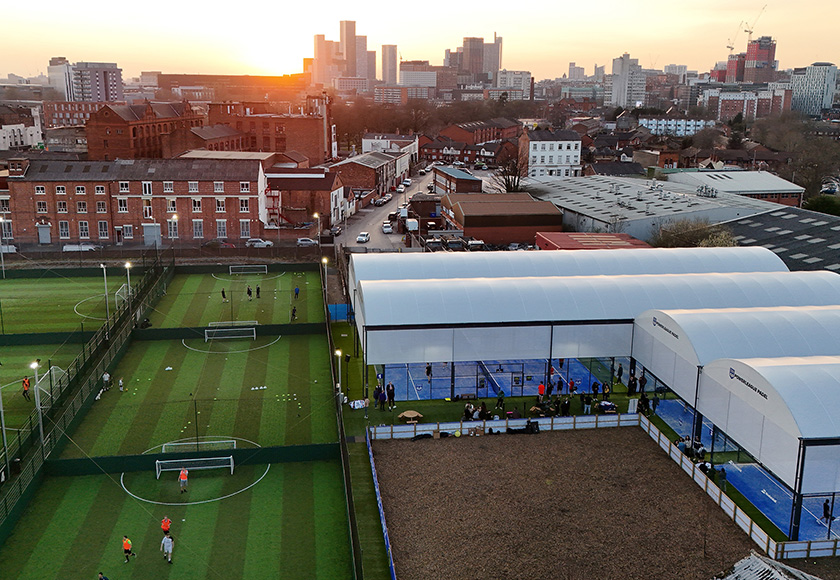
Powerleague Fives has secured a £22.5m refinancing package from Barclays to support the expansion of its rapidly growing padel business. Some of the funding will also be invested in its football facilities. Powerleague – the UK’s largest operator of small-sided football venues – said it will use the funding to develop new padel courts, regenerate existing football pitches, enhance off-pitch facilities and “improve the overall player experience” at sites nationwide.
Michael Evans, CFO of Powerleague Fives, said: “We have been working with Barclays – and specifically its Hospitality and Leisure team – for the past four years. They have been incredibly supportive of the business’s growth plans as Powerleague has transformed from a company emerging from a CVA into a business now facilitating more than 150,000 games every week.
Powerleague currently operates 44 clubs across the UK, Ireland and the Netherlands.
Curtesy: Powerleague